How Holiday Promotions Drive Restaurant Reservations (Valentine’s Day Case Study)
Valentine’s Day is one of the most competitive, and most valuable, opportunities for restaurants to acquire new guests. Brands don’t just compete for attention, but for reservations during a very narrow booking window.
Restaurants demand cycles are short. When people dine out, they usually find a place to eat relatively quickly. Even during occasion-driven moments like holidays, that behavior doesn’t change.
The challenge for marketers is converting that early intent into action. When done effectively, these campaigns don’t just generate revenue – they provide a clear signal for what’s working and how well.
This case study explores how restaurants can use holiday-driven promotions to capture demand and turn high-intent moments into measurable marketing performance as part of a broader marketing strategy.
The Marketing Challenge
Restaurant marketing presents a unique set of challenges. This campaign aimed to address several of them while maintaining strong performance.
Short Booking Window
Holiday promotions are inherently time-sensitive. While anticipation builds gradually, reservation decisions often happen much closer to the date itself.
Decisions happen slowly at first, then very quickly as the date draws nearer. Because of this, finding the right balance of marketing support throughout the promotion period is critical.
Too much investment early can lead to inefficiencies, while waiting too long risks missing peak demand.
Attribution Window
In restaurant marketing, the challenge isn’t just getting people through the door – it’s understanding what drove them in the first place. The disconnect between online engagement and in-store visitation makes attribution particularly difficult.
Although attribution lag is relatively short (~7 days on average), it can still delay insights when launching a time-sensitive campaign. This creates a learning curve early in the promotion period, where marketers must make decisions with incomplete data.
Demand Distribution Across Markets
Restaurant brands rarely operate in a single market. Locations are distributed across regions with different levels of baseline demand.
Some markets generate strong organic traffic and require less marketing support. Others need more investment to drive incremental visits. Balancing spend across the restaurant portfolio is essential to drive growth as well as efficiency.
As discussed in The Hidden Cost of “Efficient” Advertising Campaigns, highly efficient campaigns often exploit existing demand rather than expanding it.
High Competitive Noise
Holidays promotions are not a novel or unique strategy. Most restaurants run promotions at the same time to varying degrees of similarity.
This creates a crowded competitive landscape where customers are faced with an overwhelming number of choices. Standing out in this environment requires messaging that cuts through the noise and pushes for action.
The Strategy
To address these challenges, the campaign focused on three strategic principles designed to maximize results while maintaining efficient acquisition costs.
Strategy Pillar 1: Align Creative with Demand
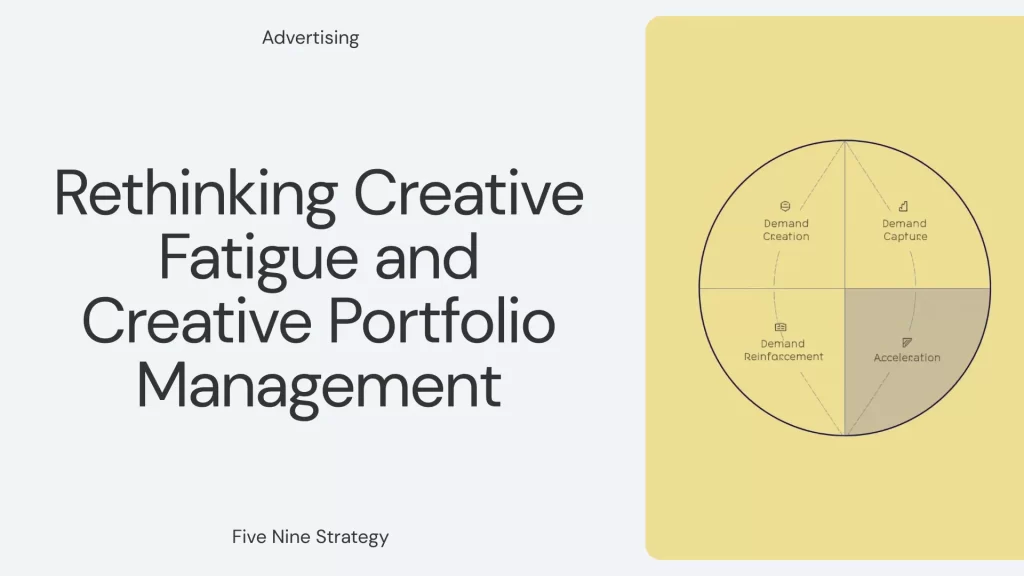
Because the promotion was time-sensitive, creative messaging needed to reflect the urgency of the occasion. We built a mini funnel using the four creative roles aligned with a typical user journey.
Instead of focusing on demand creation, most assets prioritized demand capture.
This worked because intent was already present. We simply provided an offer for demand that existed in the market, and prioritized action.
Strategy Pillar 2: Multi-Platform Distribution
To reach a broader audience, the campaign ran across two primary channels:
- Meta
- TikTok
Each platform served a distinct role in the broader paid media strategy.
- Meta: Conversion capture
- TikTok: Reach & discovery
Because TikTok attribution is largely view-based rather than click-based, performance was evaluated using video metrics like attention quality.
Post-holiday surveys helped provide additional context on how each channel contributed to reservation behavior beyond standard attribution reporting.
Strategy Pillar 3: Budget Scaling with Intent
Instead of pacing evenly across the flight, we developed a tiered budget strategy that increased investment as Valentine’s Day approached.
Reservation demand typically accelerates closer to the event date. Increasing budget during the final days of the campaign capitalized on this higher in-market demand, a common principle in budget allocation strategy.
This approach ensured that media investment aligned with real consumer behavior rather than simply pacing evenly across the flight.
Campaign Execution
The campaign media plan was developed through a process of benchmarking and expected returns. Based on historical performance and contribution margins, we established a target CPA of $15 to maintain positive ROI after factoring in cost of goods.
Media investment and projected results followed.
Media Investment
- Meta spend: $25,000
- TikTok spend: $5,000
Expected Bookings: 2,000
With these expectations, we launched campaigns 3 weeks prior to Valentine’s Day at a modest $300/day spend. This allowed the campaign to gather early performance signals before scaling investment.
Tactical Adjustments
Over the course of the flight we made several tactical adjustments.
- Meta ads supported underperforming markets at a higher volume
- TikTok ads were introduced 2 weeks prior to Valentine’s Day to expand reach and discovery
- Budget increased incrementally each week as reservation demand began to accelerate.
In Meta, daily spend was increased twice by roughly 100%, eventually reaching approximately $1,250 per day as the event approached.
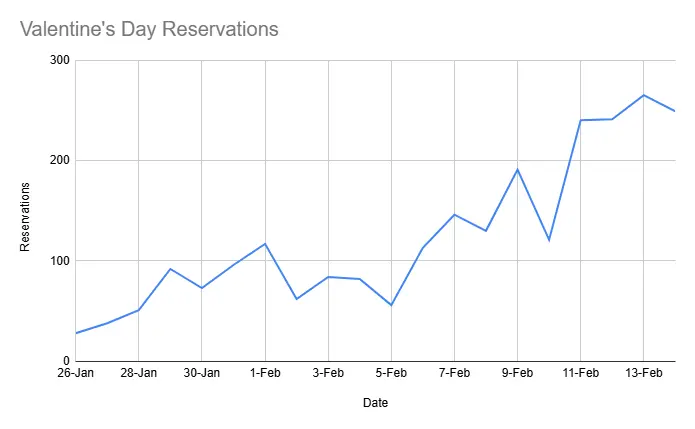
These adjustments closely followed consumer booking demand, allowing the campaign to scale investment during the period when reservation intent was highest.
Campaign Results
Following the campaign, performance was evaluated with a focus on revenue impact and acquisition efficiency.
Revenue Impact
- Revenue generated: ~$150K
- Return on Ad Spend (ROAS): 612%
Efficiency Metrics
- Blended CPA: $11
- Total bookings generated: 2,500+
The campaign significantly outperformed the initial $15 CPA target, delivering reservations at a lower cost while scaling booking volume beyond projections.
Over 90% of conversions were attributed to click-through activity, suggesting that users were actively searching for dining options rather than passively discovering the brand.
These results translated into measurable business impact, with nearly 30% year-over-year growth in in-store sales during the promotional period.
Key Insights From the Campaign
Beyond performance results, the campaign drove findings that inform how occasion-based marketing should be approached in future promotions.
Promotional Messaging Drives Action
Time-sensitive promotions significantly shorten the timeline for new customer acquisition.
While social media is not typically a channel that drives immediate action, high visibility events are an effective direct acquisition channel.
A key factor in measuring this impact was the dominance of click-through conversions over view-through attribution. This indicates that the campaign captured incremental conversions rather than taking credit for passive engagement.
Demand Capture Is the Primary Goal
Seasonal promotions tied to widely anticipated events already benefit from existing consumer demand. Unlike launching a new product, the challenge is not generating awareness but capturing demand that already exists in the market.
Creative assets that emphasized clear offer messaging –what guests could expect, what the experience included, and why the event was special – proved more effective than general brand messaging.
As the holiday approached, urgency messaging became increasingly important in accelerating booking decisions.
For examples of offer and urgency messaging, read 6 High-Converting Ad Creative Examples for 2026.
Focus on Underperforming Markets
While top performing markets drive the strongest efficiency, markets that historically perform lower represent the largest opportunity for incremental growth.
During the campaign, these markets generated reservations within profitable CPA thresholds despite typically requiring greater marketing support.
Introducing new guests through seasonal promotion helps strengthen brand recognition in markets where awareness is lower.
Once awareness is established, future campaigns can more effectively reactivate those audiences through continued promotional messaging.
A Framework for Restaurant Holiday Campaigns
Based on the campaign results, several patterns emerged that can be applied to future holiday promotions.
The Holiday Demand Capture Framework
Effective holiday promotions follow a structured approach that aligns marketing activity with how reservation demand develops over time.
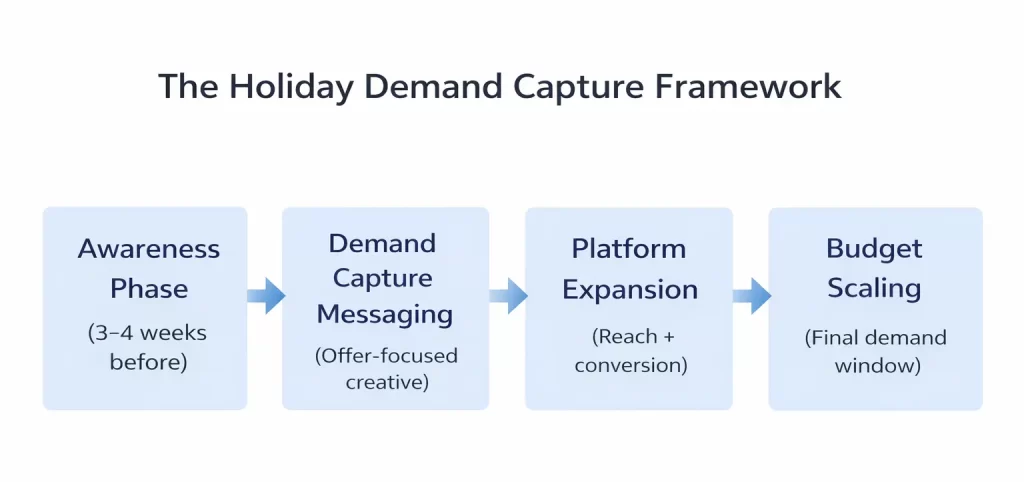
1. Start Awareness Early
Awareness efforts can begin three to four weeks before the event. The key is seeding the message with an audience of new-to-brand users early.
These messages should be pushed out through core channels initially to build warm audiences for conversion-focused ads later in the campaign.
2. Prioritize Demand Capture Messages
As the event approaches, the majority of campaign effort should shift toward demand capture messaging.
These ads should clearly communicate the value of the promotion, including:
- Event details
- Menu highlights
- Pricing
- Reservation availability
In this campaign, simple static creative performed best, particularly when the messaging directly highlighted key event details such as dates, menu offerings, and price points.
3. Expand Platform Coverage Responsibly
Build awareness with new audiences, but also make sure the majority of budget is allocated to the most efficient conversion drivers.
Meta delivered the strongest cost-per-conversion performance, but post event survey results showed strong attendance by 18-24 year old’s. This indicated that efforts on TikTok were successful despite less conversion attribution.
Balancing efficient conversion channels with discovery platforms helps maximize both reach and measurable results.
4. Scale Spend as Demand Peaks
Increase budget progressively as the event date draws nearer. Start with a 50% increase and if the CPA stays relatively flat, then increase another 50%.
This can be done multiple times a week, as long as the CPA stays flat. If CPA rises, then demand in market is not high enough to justify continued increases – wait until you get closer to the event date.
What This Means for Restaurant Marketing
Restaurant marketing presents a unique set of challenges. Converting digital engagement into in-person visits is inherently difficult, and restaurants operate in one of the most competitive advertising environments in local marketing.
One of the most reliable ways to break through that competition is occasion-based marketing.
Events like Valentine’s Day create moments of natural consumer intent. People are already planning where to dine, which makes them far more responsive to advertising that emphasizes timing, reservations, and limited availability. These moments allow restaurants to capture demand efficiently while also introducing the brand to new customers.
While competitors will inevitably run similar promotions, the advantage comes from consistently activating around these demand moments and aligning messaging with the occasion.
While holidays are the most obvious opportunities, restaurants can also create their own “occasions” throughout the year, such as:
- Date night specials
- Family night promotions
- Pet-friendly dining events
- Game day or sporting event offers
These themes do more than simply generate promotional content. They create a clear narrative and sense of urgency, which tends to drive stronger engagement and conversion behavior.
When incorporated into a broader marketing strategy, occasion-based campaigns align promotions with real customer demand. Done well, they not only improve campaign performance but also provide clearer signals for measuring demand and understanding what motivates guests to visit.
Conclusion
Holiday promotions highlight one of the most consistent truths in restaurant marketing: campaigns perform best when they align with real-world behavior. When marketing taps into moments where people are already planning to dine out, advertising shifts from creating demand to capturing it.
For restaurants looking to improve marketing efficiency, the opportunity is clear: build campaigns around occasions that naturally drive dining decisions and use urgency to convert that intent into reservations.