How YouTube Sequence Campaigns Deliver Superior Brand Building Results
Brand awareness is an often coveted goal in advertising due to its simplified reporting and relatively straightforward campaign setup. Dump budget into an ad platform and optimize for awareness, report on CPM, and boom success.
This however, is a sure way to fail. Brand awareness in reality is a much more nuanced goal. Yes you are building awareness by running ads, but who are you building it with? How long will they remember you? What will they remember?
We know not all impressions are equal, and this raises another question. What’s the best way to build awareness?
Youtube Ads boasts one of the broadest reach of any single channel or platform in today’s ecosystem. Not only that, but it’s a high impact, video only, platform with 30+ min average session duration.
Needless to say, it’s highly engaging. However, leveraging it for brand building can be costly and confusing. Target CPM, Target CPV, Target Frequency – all objectives chasing the same goal: ‘awareness.’
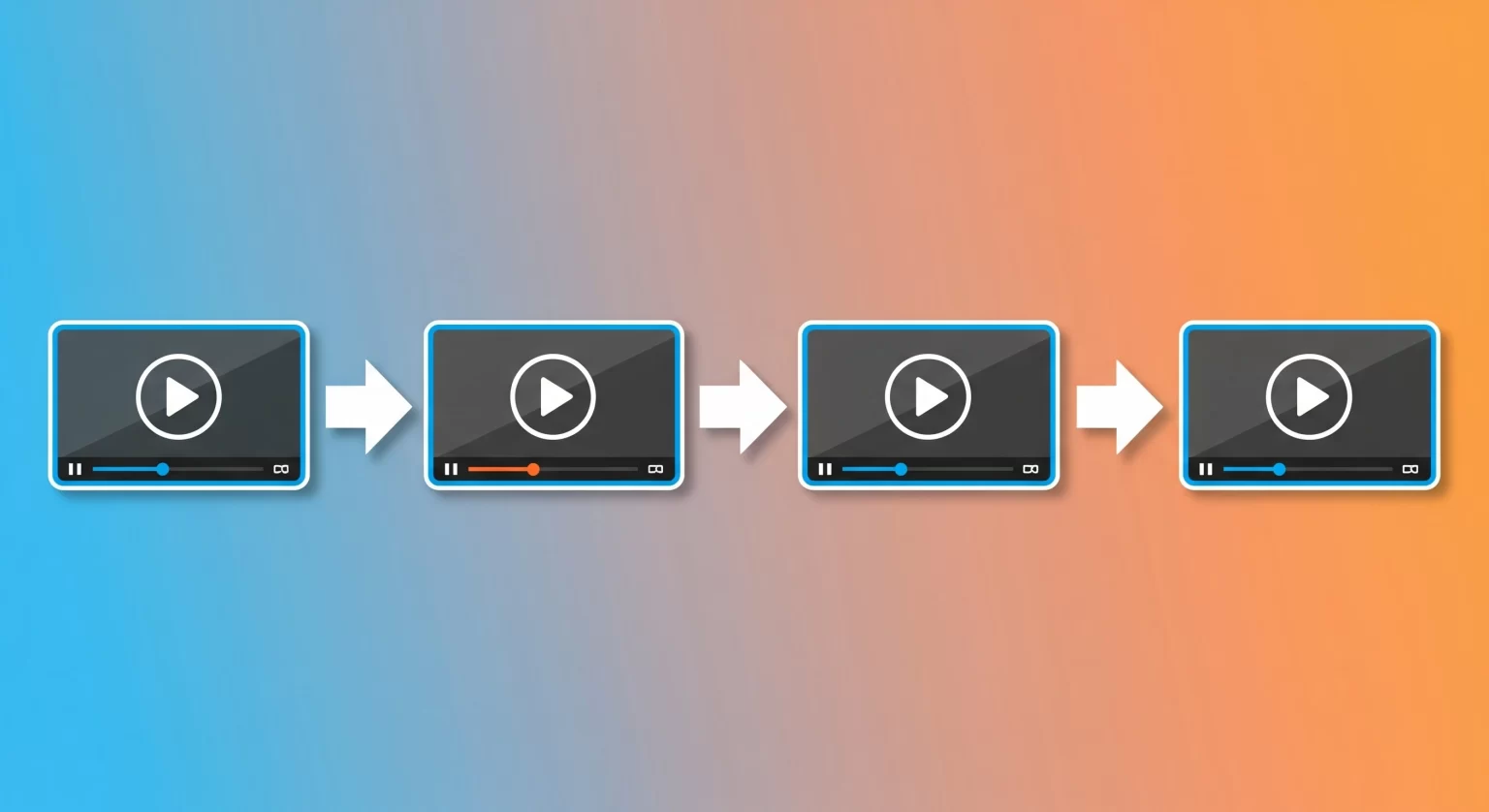
One often underutilized objective is Ad Sequence – a string of ads that play sequentially to the same user over their watch session. These campaigns offer superior control over what ads are delivered, and how many times – two of the most important factors in effective brand advertising.
TL;DR
YouTube ad sequencing lets you control the order and frequency of ads shown to users, unlike standard campaigns that optimize for engagement.
Key Benefits: Precise targeting control, sequential messaging, and better frequency management.
Key Setup Tips: Avoid broad audiences, don’t expect high click rates (benchmark: 0.25% CTR), and set first-step CPM targets at 50% of subsequent steps.
Measure success through brand lift studies ($1,000/day minimum spend) or incrementality testing with control groups. Start with 2-3 video sequences targeting core buyer demographics.
What is YouTube Ad Sequencing?
Ad sequencing at its core is a story-telling ad format where the advertiser can control the order ads are delivered to an audience.
Where other video campaigns deliver the creative that has the longest watch time or click-through rate, sequencing campaigns deliver each video regardless of how they perform.
This brings inherent benefits but also some potential pitfalls.
Why Use Ad Sequencing?
The main benefit of an ad sequencing campaign is control.
Control in the form of targeting, messaging, and most importantly frequency. Let’s take a look at each of these in detail.
Audience Targeting
Youtube ad sequencing campaigns optimize using a Target CPM model, meaning they are aimed at reaching as many people as possible within the target audience.
This means that defining the target audience through demographic, interest, in-market, and custom event signals is absolutely essential.
Small audiences made up from the core buyer demographics work best.
Pro Tip: Use audience metrics from a Branded Search campaign conversions to build an audience target profile.
Message Control
Part of a successful campaign is delivering the right message at the right time. This concept – called creative targeting – has become a core part of Meta’s algorithm.
Sequencing campaigns offer the unique ability to control what message is delivered first to a new audience and what messages follow thereafter.
This creates a story driven ad format where each subsequent video can present new information.
Pro Tip: Use a short video as the lead-in, then building on the benefits or features shown in subsequent videos.
Frequency
Key to any campaign looking to drive brand lift, frequency is a primary metric of success for Youtube. We’ve shown how higher frequency drives greater lift in brand metrics.
Standard practice is aiming for 3x frequency per week to drive optimal lift. This can be hard to achieve in campaigns aimed at driving the highest reach or conversions.
Sequencing campaigns however can control how often to show the sequence – either every 7 days or every 30 days – to better control frequency.
Pro Tip: When using a 3-4 video sequence, set a 7-day sequence cap. Use a 30-day sequence cap when more than 6 videos are used.
Using these controls can mean the difference between an successful and unsuccessful campaign. Here are some pitfalls to avoid.
Common Sequencing Mistakes (and How to Avoid Them)
As with all ad campaigns, setup matters. However, that is especially true with ad sequence campaigns given how they work.
Broad Audiences
Unlike conversion campaigns, there are no intent signals feeding into audience targeting. This means all users in an audience are treated the same regardless of how qualified they are.
Broad audience targeting will inherently be less effective. When targeting without intent, it’s necessary to target as close to your ideal customer profile as possible.
This will reduce wasted spend on individuals that are not even close to or considering a purchase.
Expecting Clicks
Unlike action campaigns like Demand Gen, sequence ads aren’t optimizing for engagement, so don’t expect to see efficient click activity.
Instead, focusing on attention metrics like watch time or % watched can help identify if the message is resonating with the audience.
Click-through rate can be used to gauge whether the audience becomes more interested over time, but don’t expect high CTRs (benchmark: 0.25%).
Pro Tip: If CTR increases over the sequence, it’s a good indicator that the campaign is working as intended.
Setting CPM Target Too High
CPM target determines how much each stage of the sequence will spend to reach a user. Setting CPM targets depends on several factors:
- Length of video: longer lengths have higher CPMs
- Ad placement: TV Screens have higher CPMs than Mobile devices
If the first video in sequence is 15 seconds (recommended) and can show on any device, it will normally run a lower average CPM than subsequent ads (especially if they are longer lengths)
Keeping track of device delivery at each step of the sequence helps control CPM targets so ads deliver more evenly across all steps.
Pro Tip: Set the first step CPM target at 50% of the subsequent steps
Avoid these common pitfalls for a smoother and more effective campaign.
How to Measure Real ROI from Sequencing
Platform metrics like viewable impressions, reach, frequency, etc. will give a good pulse check on how campaigns are performing. However, these are still a far cry from return on investment (ROI).
To better understand what ROI sequencing campaigns drive, two methods of measurement can be used:
- Brand Lift Studies
- Incrementality Test
Measuring Intent: Brand Lift Studies
Brand lift studies measure metrics like intent to buy or intent to recommend to a friend. These are useful in their ability to predict how likely an audience is to convert.
Setting up a study in Google requires a daily ad spend of at least $1,000/day. Though, it will likely take at least a month to gather the necessary sample size to reach significance.
We’ve discussed how to measure brand lift for Youtube in a case study on frequency. This won’t determine direct ROI, but will give a good understanding for campaign effectiveness.
To prove direct ROI contribution, a control/experiment test is needed.
Measuring Contribution: Incrementality Test
Incrementality testing involves two groups – a control and experiment – that either receive ads (test) or do not (control). A metric is chosen as the primary measurement to determine lift between the two groups.
Check out a previous article for a refresher on the fundamentals of incrementality testing.
Setting Up The Test
In this case, the experimental group will be included in the sequence and the control will be excluded. To make this work in Youtube, a retargeting list must be used.
Fortunately, we’ve covered how to create a test & control group in Google Analytics using a cookie stored in the browser.
The experiment group will be included in the sequence and measured against the control.
Note: This would also work with an email list – using a % of the list to target and excluding the other portion.
How To Measure Results
In the case of a Google Analytics audience, conversions like purchases or leads could be directly measured against that audience and compared to the control.
An email or 1st party data list goes one step further. Actual purchase data like revenue or customer lifetime value could be measured over a period following the sequence campaign.
Determining Lift
Lift would be measured as the difference in performance (usually a cost per conversion or conversion rate) between the control and test audience.
Pro Tip: Use a test period and post-test measurement period depending on what metric is measured to account for conversion lag time.
Getting Started with YouTube Sequencing
YouTube sequencing campaigns offer more control than standard awareness campaigns, but they require precise setup to work effectively.
Focus on tight audience targeting, clear creative progression, and proper measurement. Don’t expect immediate clicks or conversions – instead, track attention metrics and run incrementality tests to prove actual impact.
Start simple with a 2-3 video sequence. Test, measure, and scale what works.
When done right, sequencing builds the kind of brand awareness that actually drives business results.