
Marketing Reporting & Analysis

Explore how better reporting turns campaign data, platform metrics, trend analysis, and attribution context into clearer marketing decisions.

New to Marketing Reporting? Start with these foundational reads.

Learn how to build monthly reports that connect business goals, campaign performance, creative insights, and strategic recommendations.

See how weekly reporting should monitor spend, trend direction, pacing, and short-term performance signals without becoming reactive.

Understand why reports fail when they focus on static metrics instead of trends, context, interpretation, and decisions.

Marketing reporting is most useful when it explains performance, identifies what changed, and clarifies what action should come next. These topics cover weekly reporting, monthly reporting, trend analysis, diagnostics, automation, and decision-first analytics.

Weekly Reporting

Weekly reporting should help teams monitor near-term performance without overreacting to noise. This topic covers pacing, spend movement, trend direction, channel-level changes, and the difference between tactical monitoring and strategic interpretation.

Monthly Reporting

Monthly reporting should connect performance back to business goals, strategic priorities, creative learnings, and next-step recommendations. This topic covers how to turn campaign data into a narrative that leadership can actually use.

Trend Interpretation

Marketing performance should rarely be judged from one isolated metric. This topic covers how to interpret trend changes across spend, impressions, clicks, conversion rate, CPA, ROAS, lag, seasonality, and channel mix.

Performance Diagnostics

Good reporting should help explain why performance changed. This topic covers how to diagnose whether movement is caused by budget shifts, traffic quality, creative fatigue, landing page issues, tracking problems, attribution lag, or platform delivery changes.

Reporting Automation

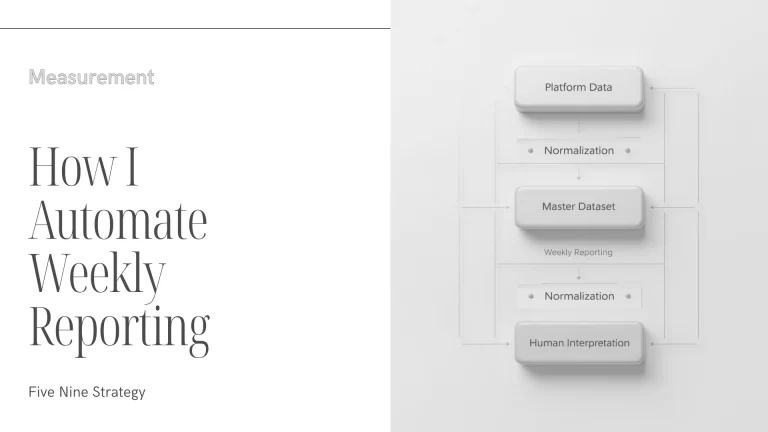
Automation can make reporting faster, cleaner, and more scalable, but it should not replace interpretation. This topic covers dashboards, data pipelines, Fivetran, recurring reports, standardized tables, and where human analysis still matters.

Decision-First Analytics

Analytics should match the decision being made. This topic covers how to separate directional evidence from causal proof, avoid false certainty, and choose the right level of evidence for optimization, budget, creative, and strategy decisions.

These related guides explain how reporting connects to tracking, attribution, creative analysis, and paid media strategy.

Attribution Models & Bias

How attribution windows, platform reporting, lag, and modeled conversions affect marketing interpretation.

Tracking Infrastructure

How conversion tracking, event quality, click IDs, and server-side systems affect reporting accuracy.

Creative & Messaging Strategy

How to evaluate creative performance beyond CTR, CPC, and surface-level engagement metrics.

Paid Media Systems

How reporting connects budgets, platforms, campaign structure, creative, measurement, and business outcomes.

When (and When Not) to Automate Marketing Reporting Cover Image
When (and When Not) to Automate Marketing Reporting
When (and When Not) to Automate Marketing Reporting Automation plays an important role in modern marketing...

Read More
How I Structure a Weekly Marketing Performance Report Cover Image
How I Structure a Weekly Marketing Performance Report
How I Structure Weekly Marketing Performance Reporting Weekly reporting is one of the most important...
Read More
Why Static Metrics Break Marketing Reporting Cover Image
Why Marketing Reports Fall Flat (And How to Fix Them)
Why Static Metrics Break Marketing Reporting Marketing reports sit at the core of performance marketing....
Read More
1 2