Google Ads Strategy

Explore how Google Ads works across search intent, automation, bidding, landing pages, reporting, and campaign structure.

New to Google Ads? Start with these foundational reads.

How short-term efficiency metrics can lead to long-term performance decline.

A real-world example of how reach, repetition, and creative drive outcomes.

These topics explain how search intent, automation, landing pages, tracking, bidding, and reporting work together inside the platform.

Search Intent & Query Analysis

Search terms show how users express demand while they are actively in-market. This topic covers how to group queries, identify demand patterns, and use search term data to improve campaign structure, messaging, landing pages, and content strategy.

Automation & Campaign Types

Google Ads has become increasingly automated through Performance Max, Demand Gen, broad match, and conversion-based bidding. The goal is not to resist automation, but to understand where control still exists: campaign structure, creative inputs, landing pages, exclusions, and measurement.

Landing Pages & Conversion

Learn how post-click experience affects Google Ads performance, why landing pages are one of the last remaining control levers, and how to diagnose conversion issues.

Measurement & Reporting

Google Ads reporting is useful, but incomplete. Strong analysis connects platform data to search terms, landing page behavior, attribution limits, and broader marketing reporting so decisions are not made from one metric alone.

Tracking & Data Quality

For a Google Ads hub, tracking is not just a related framework. It is a core platform topic because Google Ads optimization depends heavily on conversion signals, GCLID capture, enhanced conversions, hashed user data, offline imports, and attribution setup.

These broader frameworks explain the systems behind Google Ads performance.

Platform Mechanics

Understand how Google Ads automation, auctions, match types, and reporting visibility shape campaign performance.

Tracking Infrastructure

Explore how conversion tracking, attribution setup, and data quality affect Google Ads optimization and reporting.

Reporting & Performance Analysis

Learn how to interpret Google Ads data beyond surface metrics and turn campaign reporting into better decisions.

Paid Media Systems

See how Google Ads fits into the larger paid media system, including budgets, landing pages, search demand, and campaign structure.

google-ads-search-terms-in-market-demand
Google Ads Search Term Reports: How to Find In-Market Demand
Google Ads Search Term Reports: How to Turn Search Intent Into Strategy Google Ads has changed dramatically...
Read More
Why Landing Page Experience Matters More in Google Ads in 2026 Cover Image
Why Landing Pages Matter More in Google Ads in 2026
Google Ads in 2026: Why Landing Pages Matter More Than Ever A good landing page is key to success in...

Read More
What to Automate in Campaign Management — and What Not To cover image
What to Automate in Campaign Management (and What Not To)
Campaign Management Automation: What to Automate Efficiency isn’t just a campaign goal, it’s...
Read More
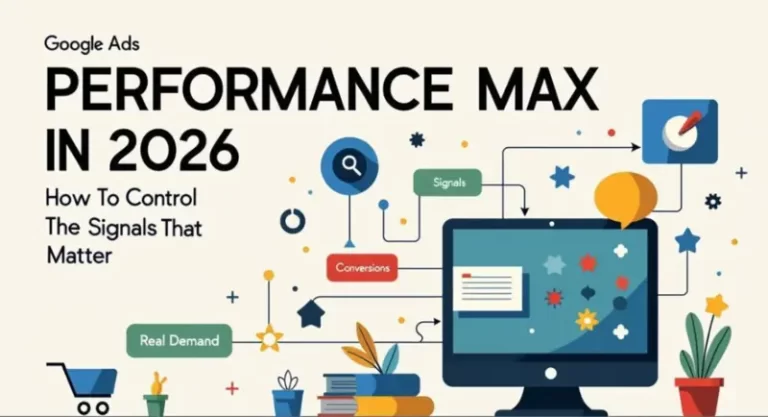
Performance Max in 2026 Cover Image
Google Performance Max in 2026: What Actually Works (and Why)
How to Get Google Performance Max to Work in 2026 When Google announced Performance Max in 2020, there...
Read More
Google Ads API Setup Guide Cover Image
Why Google Ads Attribution Breaks And How to Fix It in 2026
Why Standard Google Conversion Tracking Breaks Down in 2025 Google Ads API Integration for Custom Conversion...
Read More
Feeder Campaign Strategy Cover Image
Feeder Campaigns: Efficient Traffic In, Cheaper Conversions Out
Feeder Campaigns: The Simple Strategy That Fixes Algorithm Blind Spots In today’s world of algorithmic...
Read More
1 2 3 4